The Jersey Has No Expiration Date: How to Keep Watching Esports After Your Favorite Pro Logs Off
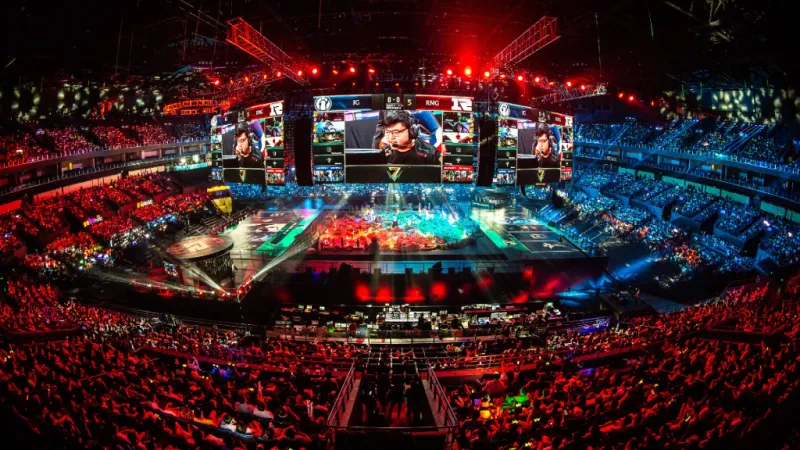
Photo: esports arena crowd watching big screen tournament stage lights, via insider-gaming.com
The farewell stream always follows the same script. A slightly-too-long highlight package. A montage set to a song that was already nostalgic when the player debuted. A camera cut to a teammate wiping his eyes. And then, at the end, a message in chat that hits harder than any patch note: thank you for everything.
And then the stream ends, and you're sitting there at 11 p.m. on a Tuesday with a jersey you bought three years ago and no idea what to watch next.
I've been through this a few times now, across a couple of different titles, and I've landed on a take I'll defend: retirement is a roster move, not a funeral. Your fandom is a portfolio, not a marriage. Treat it that way and the off-season after a farewell stops feeling like a personal shutdown and starts feeling like the most interesting part of the calendar.
The Player Leaves. The Game Doesn't.
Here's the thing nobody tells you at the start: the attachment you build to a pro is usually attachment to how they played, not to the person in the chair. You loved the aggression. You loved the absurd economy management. You loved that they would take a fight nobody else in the lobby would take, and you loved the two seconds of silence before the casters caught up.
Those things are transferable. They're styles, not fingerprints. Once you name what you actually loved — the tempo, the chaos, the patience, the trash talk — you've got a search filter for your next favorite player instead of a vague ache.
So write it down. Seriously. Three things you loved about their game. Then go find people who do those things.
Loyalty Is a Portfolio, Not a Vow
The old model of esports fandom was monogamous: one team, one player, forever, war to the death. That model worked when rosters were stable and everyone watched the same two leagues. It does not work in 2026, when a starting lineup can turn over twice in eighteen months and half the players you learned to love are now scattered across three regions.
Loosen the grip. Keep the team, but hold it at arm's length — follow the org, sure, but let the players be the through-line. Follow two or three individuals instead of one. Follow a coach whose drafts you find interesting. Follow a team in a second league you can watch on a weekday afternoon when the East Coast schedule is friendly for once.
This isn't disloyalty. It's just how the ecosystem actually works now, and the fans who adapt early are the ones who never have a dead month.
Scout the Bench Before the Highlight Reel Ends
The single best defense against a retirement gut-punch is to already have a next-generation name in your notebook.
Where do you find them? Not in the big finals, usually. Look at the academy and challenger circuits, the regional qualifiers streamed on a channel with 400 viewers, the collegiate scene, the open brackets. Look at who's putting up absurd numbers on a team that's losing, because that's the purest signal there is. Look at the mechanical clips the analysts won't shut up about on a podcast you half-listen to on your commute.
Then follow a few of them before they're famous. It costs nothing, and it pays off in that specific, slightly insufferable joy of being the person in the watch party chat who says "I've been on this guy since March."
One practical tip: build a small set of follows you can actually keep up with. Three players, two teams, one league. That's a sustainable diet for a person with a job.
Old Rivalries Outlive Rosters — Let Them
There's a weird instinct after a big retirement to declare a rivalry over. It isn't. Rivalries are institutional memory, and institutional memory doesn't retire with a single player.
When the guy who defined a matchup steps away, the matchup becomes something subtler and honestly more interesting. The teams still don't like each other. The fans still don't like each other. And the new starting rosters have to inherit a grudge they didn't personally earn, which is one of the great dramatic engines in sports.
So don't mourn the rivalry. Watch the handoff. Watch a 19-year-old get booed in an arena because of something that happened in 2022. That's not a leftover — that's the whole point.
Grief Watching Is a Phase, Not a Personality
Here's where I'll get a little blunt: there's a version of this that goes badly. You keep watching the old team, but only to compare everyone to the guy who left. You load up the retirement stream a third time. You post the clip again. Six months later you're not really a fan of anything — you're a fan of an absence.
Give yourself a season. One season of low expectations, of watching loosely, of not keeping score. Then decide whether you're still in. Most people are. But be honest about which part of it you're holding onto — the game, the team, or the memory of a specific Tuesday night three years ago.
The Thirty-Day Reset
If you're in the middle of a farewell hangover right now, here's a practical way out, and it's not complicated.
- Watch one full match from a league you have no emotional stake in. Neutral viewing resets the palate faster than anything.
- Pick one rookie and follow them for a month. No highlights required — just watch their games.
- Find a watch party or a Discord. Esports fandom dies quietly, in a room alone, more often than it dies loudly.
- Mute the nostalgia accounts for two weeks. You can unmute. You'll want to. Just give the feed a break.
- Go to a local event if there's one within driving distance. Nothing relights the flame like an arena with bad nachos and a crowd that starts chanting before the broadcast even goes live.
What the Farewell Stream Is Actually Telling You
At the end of every one of these streams, the player says some version of the same thing: don't make this weird, watch the next generation, this game is bigger than me.
They mean it. And the game really is bigger. The circuit keeps running, the rookies keep arriving, the analysts keep being wrong on air, and somebody in a challenger league right now is about to make you feel the exact way you felt the first time you watched your guy win a round one.
The jersey has no expiration date. Neither does your seat in the (virtual) arena. Go find the next one.